Перейти до контенту

Isotope

Ізотоп

Isotope – is a variety of an atom of a chemical element that differs from other isotopes of the same element in the number of neutrons in the nucleus. In other words, all atoms of one element have the same number of protons in the nucleus (which determines its atomic number) but can have different …

Ізотоп

Ізотоп

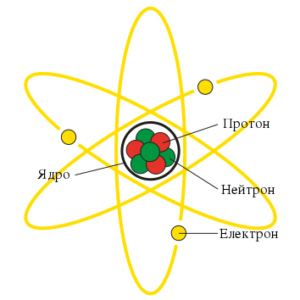
Ізотоп – це різновид атома хімічного елемента, який відрізняється від інших ізотопів цього ж елемента за кількістю нейтронів у ядрі. Тобто всі атоми одного елемента мають однакову кількість протонів в ядрі (що визначає його атомний номер), але можуть мати різну кількість нейтронів, що визначає їх масове число.

Neutron

Нейтрон

Neutron – is an elementary particle with no electric charge that is part of the atomic nucleus. History of Neutron Discovery The discovery of the neutron was a significant event in the history of science. Before that time, two main particles of the atom were known: electrons, which have a negative charge and move around …

Proton

Протон

Proton – is an elementary particle that constitutes the nucleus of an atom along with neutrons. It has a positive electric charge and is symbolized by the letter “p.”

Протон

Протон

Протон – це елементарна частка, що становить ядро атома разом із нейтронами. Він має позитивний електричний заряд та символізується буквою “p”.

Каталізатор

Каталізатор

Каталізатор — це речовина, яка збільшує швидкість хімічної реакції, забезпечуючи альтернативний шлях із меншою енергією активації. Іншими словами, каталізатор допомагає прискорити хімічну реакцію, зменшуючи кількість енергії, необхідної для реакції.

Electron

Electron (Greek Ηλεκτρόνιο) is an elementary particle carrying a negative electric charge. It is one of the fundamental constituents of atoms, alongside protons and neutrons.

Електрон

Електрон (грец. Ηλεκτρόνιο)— елементарна частинка, що несе негативний електричний заряд. Це одна з основних складових частинок атомів, поряд з протонами і нейтронами.